
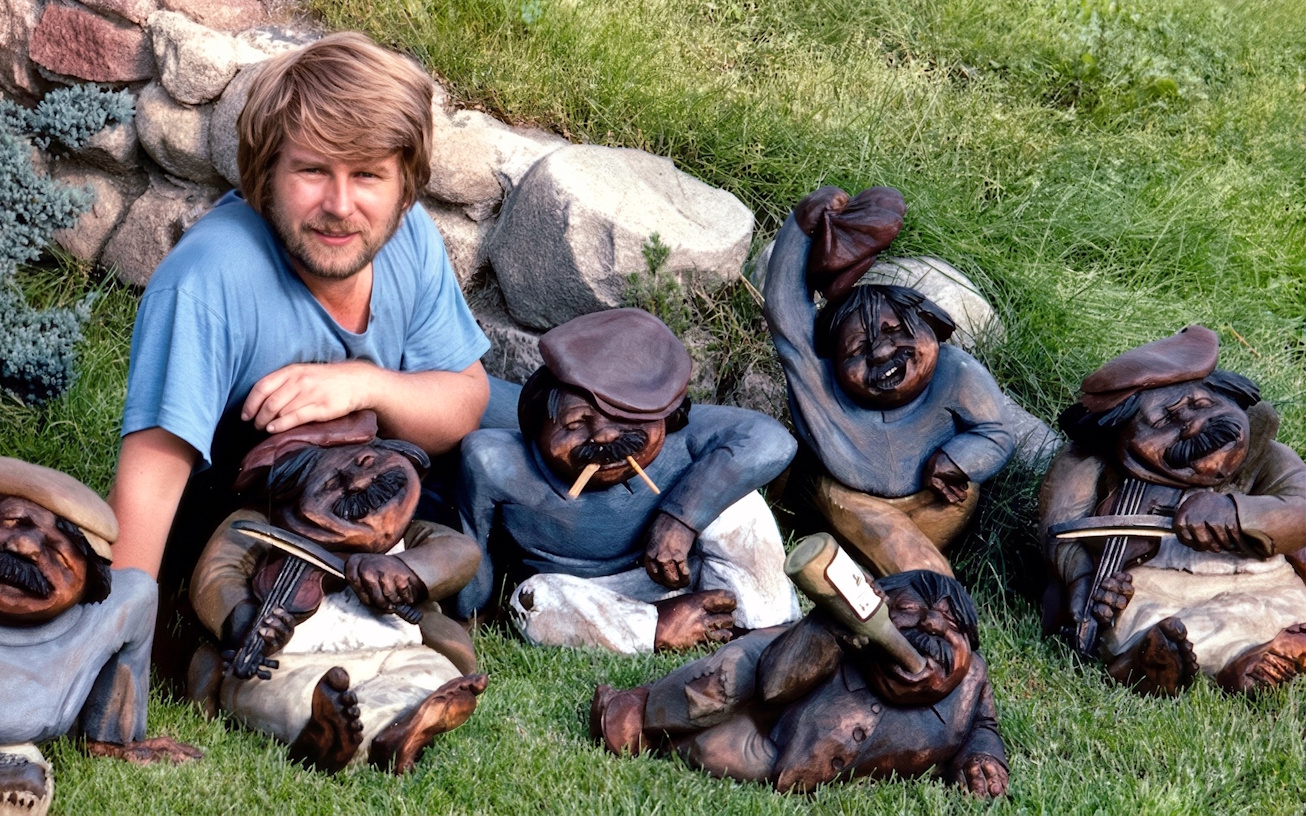
The artistic journey of Witold Dominik Mizerski (b. 1952 in Warsaw) is a fascinating testament to the search for personal identity through matter. Though born in the capital, it was Piaski – a small town near Lublin, where the artist arrived in 1954 – that became the cradle of his sensibility and the fundamental source of his creative inspiration.
Shaping Sensitivity
Education in Lublin opened before Mizerski access to the environment of the Fine Arts High School, which allowed him to refine his calling: sculpture. It was in Piaski, carefully observing the local community, the lives of simple people and the bustle of horse fairs, that he learned to see beauty in everyday life. This early fascination with the authenticity of small-town life became the backbone of his work – in the simplicity of gesture and the silhouette of sculpted figures, the artist finds universal truth about mankind. His sculptures often show a strong connection to Polish village life, richness of detail, and a distinctive artistic style.
The beginning of Mizerski's creative work was marked by modesty and determination. Lack of access to professional tools was not an obstacle – his first experiments with form were conducted in unusual materials, such as soap and wax.
The turning point came in 1970. Taking up work in a master carpenter's studio opened before him access to professional technical facilities and linden wood. This transition was the ultimate crowning of his passion: wood carving became a consciously chosen life calling. In his works we find a unique synthesis – folk sincerity of expression combined with sophisticated technique, inspired by great masters. Among the artist's most important inspirations are the paintings of Peter Bruegel ("The Fight Between Carnival and Lent") and the sculptural genius of the Zakopane artist Antoni Rząsa, whose influence is clearly visible in later works with religious themes.
The 1970s brought dynamic career growth. After his debut in Lublin (1973) and exhibition success at the Museum in Kazimierz Dolny (1974), Mizerski's work gained wide recognition. Moving to Warsaw in 1975 with his wife, Beata Grabińska, and establishing cooperation with the foreign trade office "DESA" allowed him to make a mark on the international stage.
Key Career Milestones:
• 1976: Official obtaining of sculptor artist rights by the Ministry of Culture and Arts
• 1978: Trip to Canada, creative work and a series of exhibitions in the Montreal area
• 1979: Exhibition in Bern, Switzerland - "Galeria Tatra"
• 1979–1989: Cyclical, annual presentations of works in West Berlin during Christmas period
• 1989: Another trip to Canada, exhibition in Val Morin
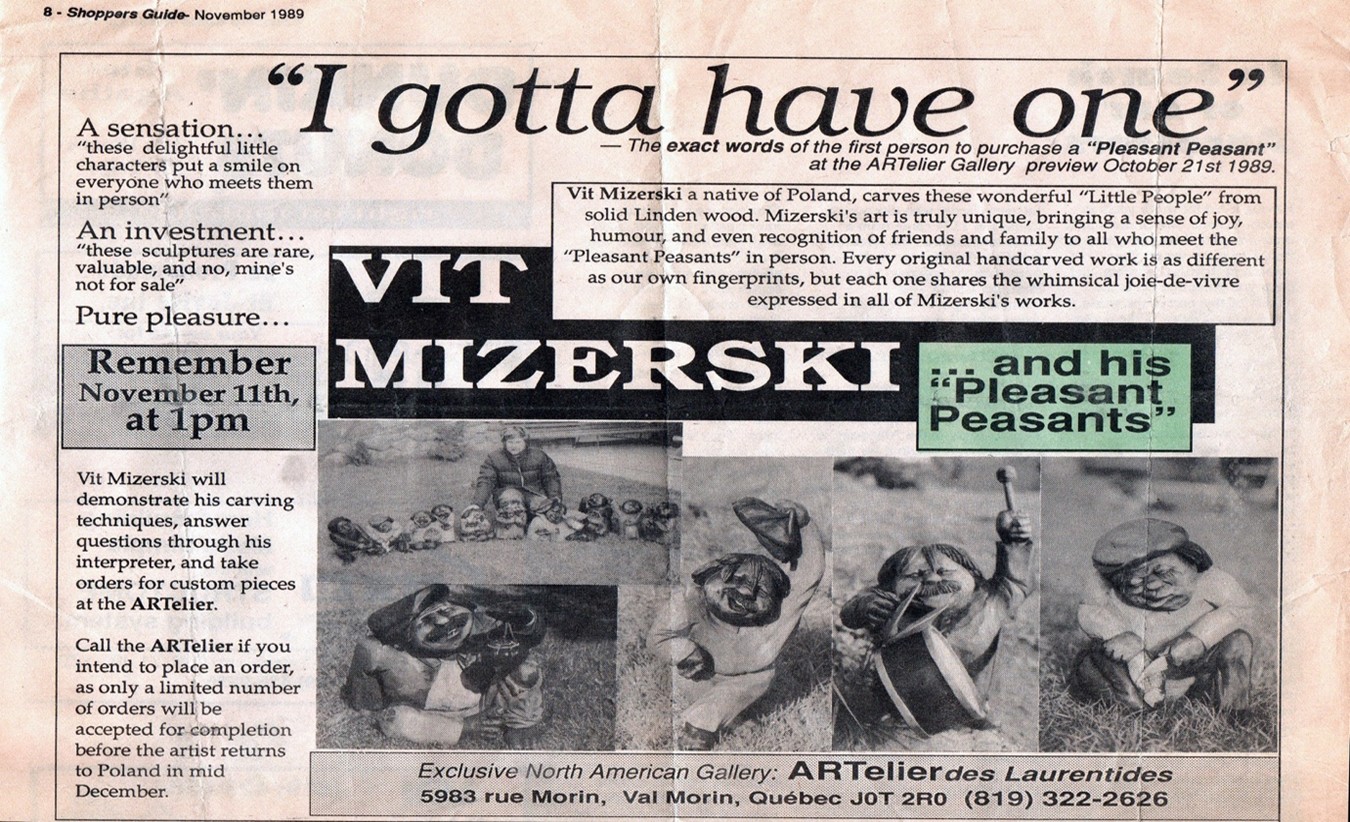
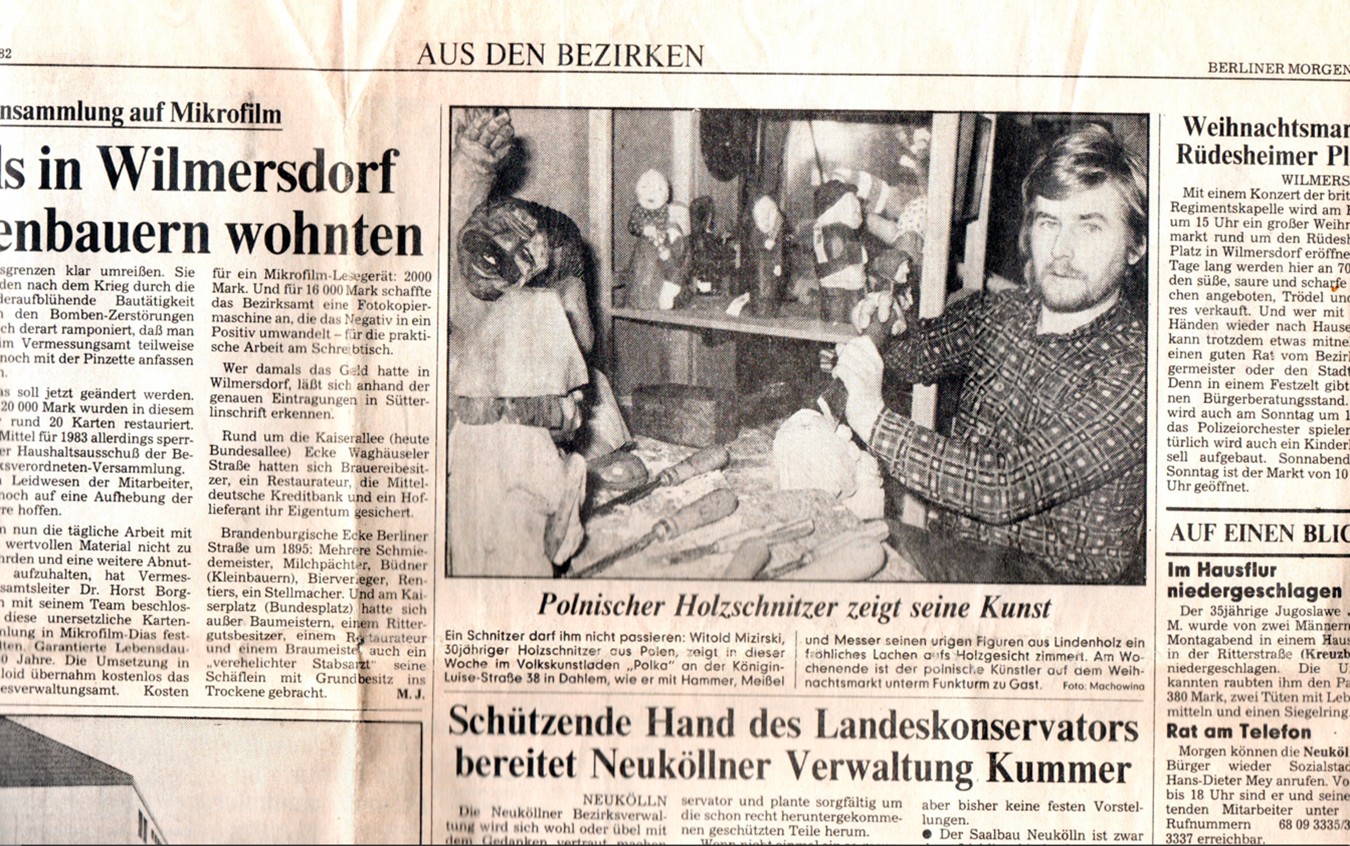
Today, sculptures by Witold Dominik Mizerski are found in private collections – from Switzerland (where Prof. Ernesto Carafoli collected dozens of his works), through Germany, Sweden, Italy, to Japan, USA and Canada.
In 2004 he settled in Józefów near Warsaw. Here he continues his creative work, with unchanged sentiment and nostalgia returning in his thoughts to Piaski – the place where it all began and which remains a source of artistic memories for him.